

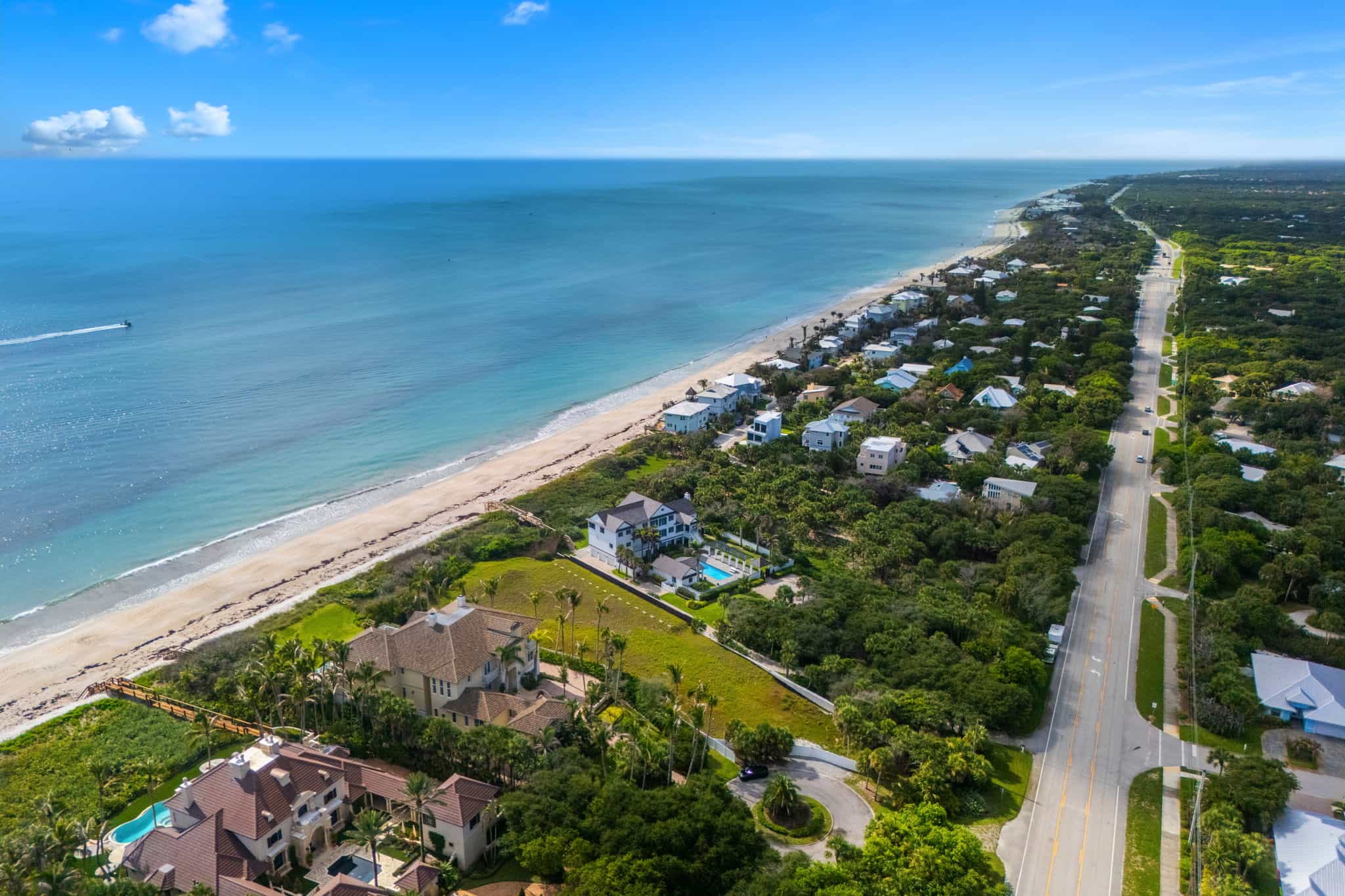
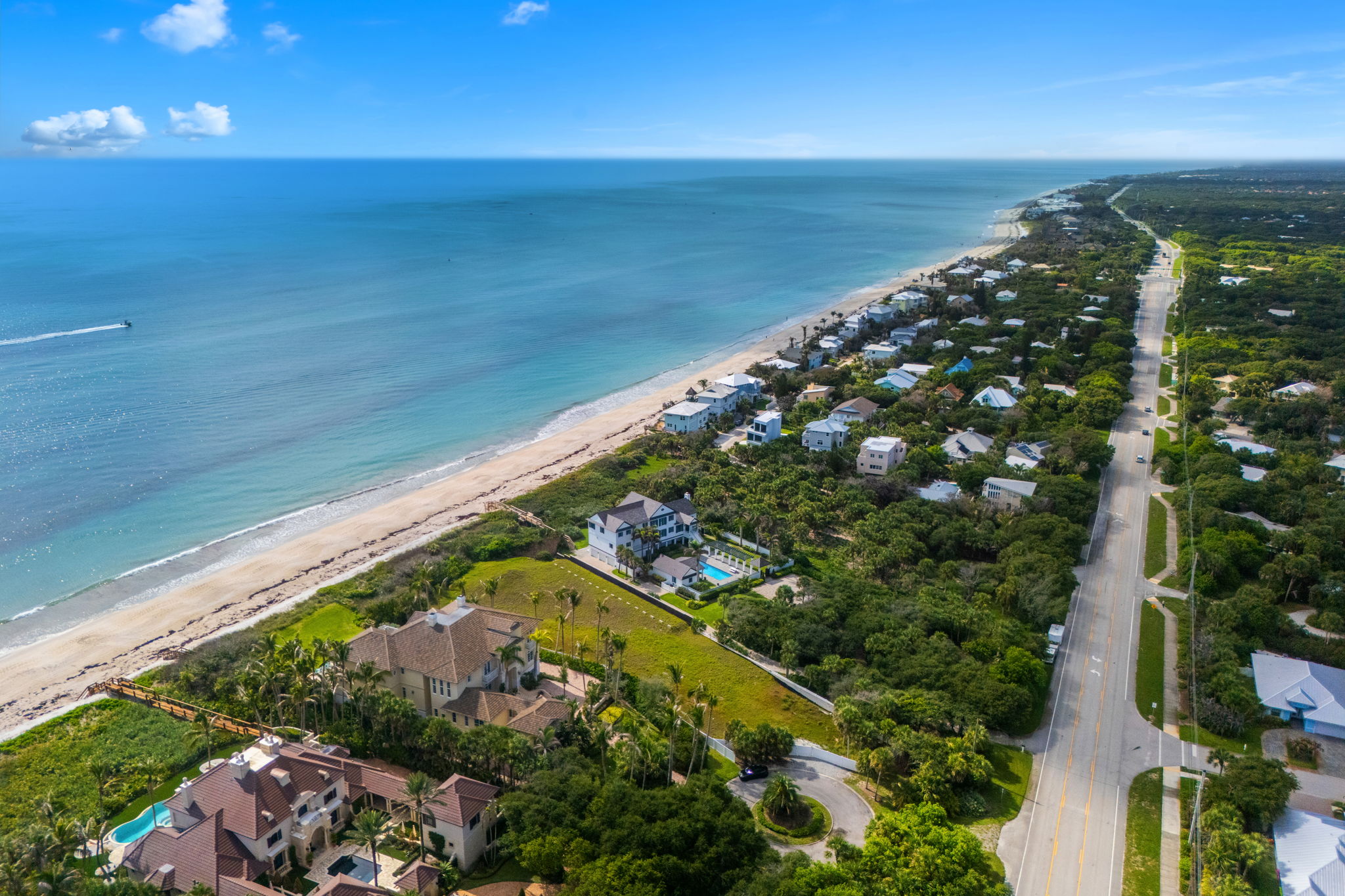
What Makes a True Oceanfront Estate? A Look at the Architecture, Land, and Details That Set Trophy Properties Apart
More Than a View: How Oceanfront Estates Are Actually Measured
There's "ocean view" and then there's oceanfront. On Florida's barrier islands, the distinction is worth millions — sometimes tens of millions. If you're exploring the upper tier of Florida's coastal real estate market, understanding what separates a signature oceanfront estate from everything else helps you ask the right questions and make a more confident decision.
Here's a breakdown of the elements that define a true trophy oceanfront property — from the land beneath it to the architecture above it.
Linear Feet of Shoreline: The Metric That Matters Most
When real estate professionals evaluate oceanfront land on Florida's Atlantic coast, one of the first figures they examine is linear shoreline frontage. This is the number of feet a parcel directly borders the ocean or beach — and it drives value in a way square footage alone cannot.
A standard single-family lot on a Florida barrier island may offer 60 to 80 feet of frontage. Properties offering 100 feet or more are considerably rarer and command significant premiums. Brevard County's barrier island communities — from Melbourne Beach south toward Sebastian — have a finite supply of developable oceanfront land, and that supply only contracts over time as properties are built out or consolidated [1].
The Florida coastline is not expanding. What exists today is what will ever exist.
British West Indies Architecture: Why the Style Suits Florida's Coast
One architectural tradition that has found a natural home on Florida's Atlantic and Gulf coastlines is British West Indies (BWI) design. Originating in the Caribbean colonies of the 17th and 18th centuries, BWI architecture was engineered for heat, humidity, and coastal wind long before air conditioning existed [2].
Its hallmarks — covered verandas, louvered shutters, deep roof overhangs, elevated foundations, natural materials like coral stone and cedar — are not aesthetic choices alone. They are practical responses to a tropical climate. The covered veranda, for instance, acts as a thermal buffer, shading interior spaces from direct sun while allowing air circulation. Deep overhangs shed rain away from windows and walls.
On Florida's east coast, BWI architecture reads as both beautiful and sensible. Large covered lanais double as primary living space for much of the year. The orientation of rooms toward prevailing ocean breezes, and the use of arched openings and louvered details, connects the home to its environment rather than sealing it away from it.
For buyers evaluating construction quality, BWI details done at a high level — custom millwork, genuine hardwoods, masonry rather than synthetic finishes — are a marker of craftsmanship that holds its integrity decade after decade.
What 1+ Acres Means on a Barrier Island
Acreage on a Florida barrier island is extraordinary by definition. Most barrier islands are narrow — the Indian River Lagoon bounds the western edge and the Atlantic Ocean bounds the east, leaving a sliver of developable land measured in blocks, not miles [3].
A parcel of one acre or more on a Florida barrier island typically represents either a historically large private lot or a consolidated assembly of former smaller parcels. Either way, it offers something the surrounding market cannot replicate: land depth, setback from neighboring structures, room for amenity-rich grounds, and genuine privacy.
The Indian River Lagoon itself — which parallels Florida's east coast for roughly 156 miles — is one of North America's most biodiverse estuaries [4]. Properties situated between the Atlantic and the Lagoon exist in a uniquely scenic corridor, with ocean on one side and calm water views on the other.
Indoor Amenities at the Estate Level
At the top tier of Florida's coastal market, certain amenities have shifted from luxury to expectation. Among them:
Climate-controlled garages. Florida's heat and humidity are hard on vehicles, artwork, and equipment. A climate-controlled garage is both a practical and value-preserving feature.
Dedicated screening rooms and fitness spaces. Estate-scale properties are designed to function as self-contained environments. A properly built screening room with acoustic insulation and tiered seating, or a gym equipped with steam and recovery amenities, reflects construction planning from the foundation up — not a retrofit.
Chef's kitchen with a butler's pantry. The separation of prep and service functions from the main kitchen allows the primary cooking space to remain a clean, organized environment during events. Twin islands, commercial-grade ranges, and dedicated pantry storage are hallmarks of a kitchen designed for use, not appearance.
Multi-unit guest configurations. Connected guest houses or separate suites with independent access allow a large property to function for multiple households without sacrificing privacy for the primary residents.
Working with the Right Representation
At this level of the market, the right brokerage brings more than access to listings — it brings deep knowledge of local land values, construction quality standards, and the specific due diligence that oceanfront properties require in Florida's regulatory environment.
At MaxxCity Realty, our team focuses on Florida's Space and Treasure Coasts, with a focus on barrier island and coastal properties for our MaxxCity Luxe brand. If you'd like to understand how a specific property compares to the broader oceanfront market, we're happy to walk through the details with you.
Reach out to our team at www.maxxcityrealty.luxe or call (321) 468-5992 to start the conversation.
Sources
- [1]Brevard County Property Appraiser — https://www.bcpao.us
- [2]Florida Architecture: 100 Years — 100 Places, Florida AIA (historical reference on regional architectural traditions); see also University of Florida Historic Preservation Program — https://www.dcp.ufl.edu/preservation/
- [3]St. Johns River Water Management District — Barrier Island Land Coverage Data — https://www.sjrwmd.com
- [4]NOAA National Estuarine Research Reserve — Indian River Lagoon Profile — https://coast.noaa.gov/nerrs/reserves/jobos.html